From Page Fumbles to Seamless Stories: How E-Readers Quietly Upgraded My Life
Imagine this: you’re curled up in bed, ready to unwind with a book—only to realize the physical copy is buried under a pile of mail, your bookmark lost, and the light too dim. That was my nightly struggle. But one small device changed everything. It slipped into my routine like a quiet friend, turning frustration into flow. This isn’t about tech for tech’s sake—it’s about how something as simple as an e-reader can soften the edges of daily life, one page at a time. It didn’t replace my love for books. It protected it. And in ways I never expected, it gave me back time, peace, and even a little joy I thought I’d lost to busy days and cluttered corners.
The Cluttered Reader’s Dilemma: When Books Become a Burden
Let’s be honest—most of us who love books don’t just read them. We collect them. We admire their spines on shelves, we gift them with care, we promise ourselves we’ll get to that novel “next month.” But real life? It doesn’t always leave room for good intentions. I used to keep a growing stack of unread books beside my bed, like silent judges watching me choose my phone over a chapter. One would fall behind the nightstand, another would get soaked in the rain when I tried reading outside, and more than once, I showed up to book club having misplaced the very book we were discussing.
And it wasn’t just about space. It was the weight—literally. I remember dragging three hardcovers through the airport, only to realize one was already halfway finished by someone else in my family. The guilt of unfinished books haunted me. I wanted to read more, but the logistics made it feel like a chore. Carrying a book in my bag meant making room—sacrificing my water bottle, my sweater, or that notebook I swore I’d finally start journaling in. Even lighting became a problem. How many times have you squinted under a dim lamp, trying to finish “just one more page,” only to give up with a sore neck and tired eyes?
Then there was the emotional cost. I’d lend a beloved novel to a friend, picturing us discussing it over tea—only to realize months later it was still in her guest room, unread, or worse, lost. I stopped sharing books altogether, not out of stinginess, but because it hurt. The dream of reading freely, widely, and joyfully was being choked by the very thing I loved: the physical book. It wasn’t the story that was heavy—it was the stuff around it.
First Impressions: Skepticism, Screens, and Letting Go of Paper
I’ll admit it: I was skeptical. When my niece first suggested I try an e-reader, I wrinkled my nose. “A screen?” I said. “How is that reading? It’s like watching TV with words.” I pictured glare, blue light, headaches, and that flat, lifeless feeling of staring at a phone. I associated e-readers with cold efficiency—something for business travelers, not for someone who loved the smell of paper and the quiet crinkle of a turning page.
But one rainy Sunday, with nothing good on and a craving for a novel I didn’t own, I borrowed my friend’s device. I expected discomfort. What I found was surprising. The screen wasn’t shiny or bright like a tablet. It looked—well, like paper. The text was crisp, the background soft. I could read in the dim light of her living room without turning on a lamp. And the weight? It was barely there. I held dozens of books in the palm of my hand, and it felt lighter than my morning coffee mug.
What really won me over wasn’t the tech—it was the lack of it. No notifications. No emails popping up. No apps begging for my attention. It did one thing: let me read. I could adjust the font size without feeling like I was cheating. I could read in direct sunlight on her porch, something my tablet made impossible. And the battery? I used it for a week before I even thought to plug it in. That weekend didn’t convert me overnight, but it cracked open a door. Maybe digital reading didn’t have to feel cold. Maybe it could feel like a different kind of comfort—one that didn’t ask me to sacrifice my eyes, my time, or my peace.
The Quiet Upgrade: How E-Readers Fit Into Real Life
The real magic of my e-reader wasn’t in what it could do—it was in how quietly it fit into my life. It didn’t demand attention. It didn’t buzz. It didn’t need charging every night like my phone. It was just… there. Ready. And that subtle reliability changed everything. I started keeping it in my purse, not because I planned to read, but because I knew I could—anytime, anywhere. Waiting for the kids at soccer practice? I pulled it out. Sitting in the doctor’s office? Already halfway through a chapter. Even those five minutes while dinner cooked became precious reading moments I used to waste scrolling.
One of the most unexpected joys was how easy it was on my eyes. As I’ve gotten older, small print in paperback novels started to strain me. I’d need reading glasses, good light, and a lot of focus. With the e-reader, I simply tapped a button and made the text larger. No squinting. No frustration. Just comfort. And the built-in dictionary? A game-changer. I used to skip over unfamiliar words or stop to look them up online, breaking the flow. Now, I just tap the word, and the definition appears. It’s like having a gentle tutor beside me, helping me understand more without slowing down.
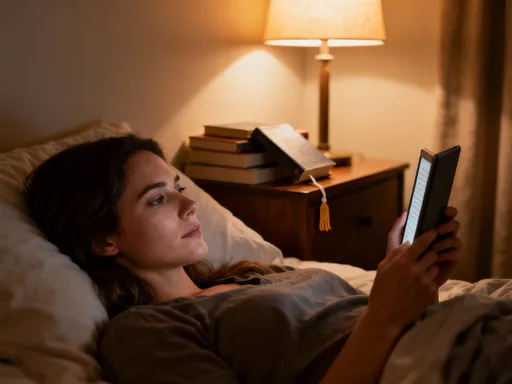
Then there’s night reading. I’ve always been a late reader—someone who unwinds with a book after the house is quiet. But reading under a lamp meant disturbing my husband or straining my eyes. With the e-reader’s front light, I can read in complete darkness, the page softly illuminated without glare. It’s gentle, personal, and private. No more fumbling for bookmarks either—every time I close it, it remembers exactly where I left off. It’s these small things, stacking up day after day, that made me realize: this isn’t just a gadget. It’s a quiet upgrade to how I live.
Family Pages: Sharing Stories Without the Scarcity
One of the sweetest surprises has been how my e-reader brought our family closer to reading—together, yet apart. Before, if I wanted to share a book with my sister, I had to either mail it, wait for her to finish, or buy a second copy. Now, I can send her a digital copy with a few taps. She reads it on her own device, and when she’s done, it’s like returning a borrowed dish—effortless and kind.
My teenager, who used to roll her eyes at my “old-fashioned” book recommendations, now borrows from my library. She reads classics for school, picks up romance novels in secret (I pretend not to notice), and even uses the dictionary feature when she comes across a word she doesn’t know. We share reading lists, send each other highlights, and sometimes, we start the same book at the same time. Last month, we both read a novel about a mother and daughter traveling through Italy. We didn’t talk about it every day, but when we did, it felt deeper—like we’d lived a small part of the story together.
And there’s no guilt about lost books or damaged covers. No more “Where’s that book I lent you?” texts. The sharing is seamless, and the access is instant. For a family that’s often pulled in different directions—school, work, sports, friends—this little device has become a quiet thread of connection. We don’t always have time to sit and talk, but we can read the same story and feel close anyway. It’s not about replacing face-to-face time. It’s about creating a new kind of togetherness—one built on shared imagination and quiet understanding.
Building a Reading Habit: From Guilt to Grace
I used to carry guilt like an extra bag. Guilt for not reading enough. Guilt for buying books I never finished. Guilt for choosing TV over literature after a long day. I wanted to be the kind of person who read deeply, widely, thoughtfully—but life kept getting in the way. The truth is, willpower isn’t always enough. What we need is ease.
The e-reader gave me that. Because it’s always with me, starting to read requires almost no effort. There’s no setup, no searching, no lighting a lamp. Just open and read. Those stolen moments—five minutes here, ten there—add up in ways I never imagined. I’ve finished more books in the past year than I did in the previous three. Not because I have more time, but because I use the time I have more gently.
The progress tracker helps too. I don’t use it to pressure myself, but to celebrate. Seeing that I’m 60% through a novel feels good. It’s not a race, but a quiet acknowledgment: “Look how far you’ve come.” And when I finish a book, that little celebration animation—a soft chime, a small animation—feels like a pat on the back. It’s not much, but it’s enough to make me smile and think, “I did that.”
Over time, reading stopped being something I “should” do and became something I look forward to. It’s no longer a chore on my self-improvement list. It’s a comfort. A pause. A gift I give myself. And that shift—from guilt to grace—has changed more than my reading habits. It’s changed how I see myself. I’m not failing at reading. I’m finally making space for it, in a way that fits my real life.
Beyond the Book: Unexpected Perks of a Simple Device
I thought I’d only use my e-reader for novels. But it’s become so much more. When I planned a trip to Portugal last year, I downloaded travel guides instead of lugging heavy books. I highlighted walking routes, saved restaurant tips, and even bookmarked local phrases. All in one place. No torn pages, no coffee stains, no last-minute panic when I couldn’t find the right guide.
I’ve started using it for recipes too. Instead of printing them out or scrolling on my phone while cooking (and risking a greasy screen), I keep my favorite dishes in a folder. I can adjust the text size so I can read from across the kitchen, and I don’t have to worry about splashes damaging the device. It’s practical, yes—but also peaceful. No more juggling paper and pots at the same time.
And then there’s language learning. I’ve always wanted to improve my Spanish. Reading full novels felt intimidating, but with the e-reader, I started small. I downloaded a simple mystery novel in Spanish. When I didn’t know a word, I tapped it. The dictionary gave me the meaning instantly. No flipping, no frustration. I read slowly, but I read. And over time, I understood more. It wasn’t a formal class. It was quiet, consistent practice—fueled by curiosity, not pressure.
Even mindfulness has found a place here. Some nights, instead of scrolling through news or social media, I read poetry or short essays. No ads. No algorithms. Just words that calm my mind. The e-reader, in its simplicity, has become a tool for presence. It doesn’t pull me away from life. It helps me return to it—with more focus, more peace, and more intention.
A Lighter Life: What We Gain When We Let Technology Serve Quietly
Looking back, I realize the e-reader didn’t change my love for stories. It changed my relationship with the space around them. My bookshelves are still full. I still enjoy the occasional paperback with my morning coffee. But I no longer feel burdened by the weight of unread books or the guilt of lost bookmarks. My mind feels lighter. My routines feel smoother. And my joy in reading? It’s deeper than ever.
This little device taught me something important: technology doesn’t have to be loud to be powerful. It doesn’t need to buzz, ping, or demand attention to make a difference. The best tech isn’t the one that dazzles us—it’s the one that disappears, that serves without showing off, that makes life a little easier without us even noticing.
For women in our 30s, 40s, and 50s—juggling families, careers, homes, and our own dreams—this matters. We don’t need more noise. We need more ease. We don’t need to keep up with every trend. We need tools that help us slow down, breathe, and reclaim the things we love—without the friction.
The e-reader didn’t make me more modern. It helped me stay true to myself. It protected my time, honored my curiosity, and gave me back the simple pleasure of getting lost in a story. And in a world that often feels too fast, too loud, too much—that’s not a small thing. It’s a quiet revolution. One page, one moment, one breath at a time.